

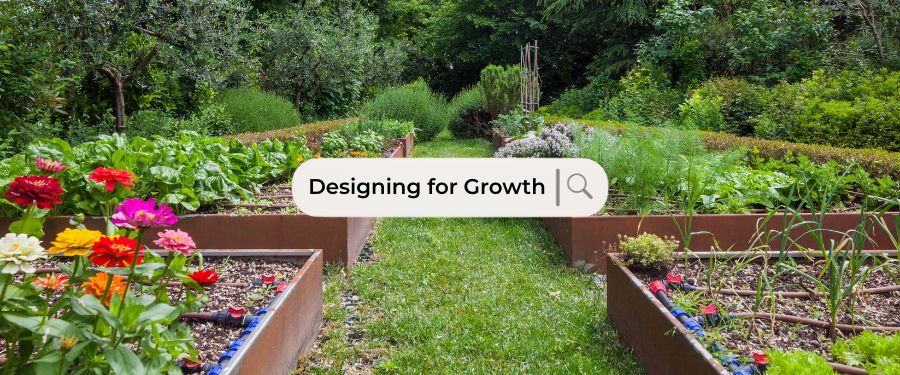
As spring settles in and gardens begin to bloom, it’s the perfect time to reflect on the balance of creativity and strategy that goes into cultivating growth. At LDM, we see many parallels between thoughtful garden planning and intentional web design.
Creating a successful garden requires more than planting what looks beautiful — it takes structure, planning, and an understanding of how all the elements work together. The same is true when designing a digital experience. Every detail should support your brand while guiding visitors naturally through your site.
Follow along to see the similarities between garden planning and web design:
1
Pathways & User Flow
In a garden, pathways guide visitors through the space, leading them from one area to the next — whether it’s a vegetable bed, a seating area, or a field of wildflowers. These paths create structure and direction, ensuring the experience feels intentional rather than overwhelming.
The same applies to your website. Visitors rely on clear navigation and a thoughtful layout to move seamlessly from one section to another. Every page, link, and call to action should work together to guide users through your site with ease. When user flow is intentional, the experience feels natural, engaging, and valuable.
2
Plant Grouping & Content Organization
In a garden, plants are grouped based on their needs and how they complement one another visually. Without organization, a garden can quickly feel cluttered and difficult to navigate.
Similarly, your website content should be organized with purpose. Grouping related services, messaging, and information creates clarity and helps visitors quickly understand your brand. Thoughtful organization improves usability while strengthening your messaging and overall brand experience.
3
Spacing & White Space
A healthy garden needs room to grow. When plants are overcrowded, they compete for resources and lose their ability to flourish.
In web design, white space serves the same purpose. It gives content room to breathe, makes information easier to process, and prevents visuals from feeling overwhelming. Rather than filling every inch of a web page, intentional spacing allows key elements to stand out and guides the user’s attention more effectively.
Our team believes the strongest digital experiences are built with both creativity and strategy — just like a thoughtfully designed garden. Every detail should work together to create something cohesive, engaging, and built for long-term growth.
With over 50 years of combined experience, our team approaches every project with intention, balancing aesthetics with functionality to help brands flourish online.